
Visit Our Clinic in Westmead
Androgenetic Alopecia Treatment in Parramatta
- Free Consultations
- Aesthetic Treatments
- Hair Restoration
- Gift Vouchers Available
- Buy in Bulk and Save
Managing Gradual Hair Thinning & Loss
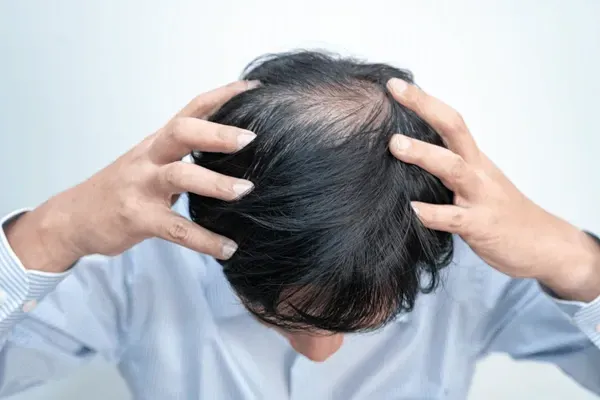
Androgenetic alopecia, commonly referred to as male and female pattern baldness, is a progressive condition that leads to gradual hair thinning and eventual hair loss. This hereditary condition is primarily caused by the sensitivity of hair follicles to dihydrotestosterone (DHT), a byproduct of testosterone. Over time, DHT causes follicles to shrink, shortening the hair growth cycle and leading to finer, weaker strands until growth slows significantly.
At A9 Skin & Hair Wellness Clinic in Parramatta, we focus on recognising early signs of pattern hair loss and understanding how genetic, hormonal and lifestyle factors may be influencing changes in hair density. In men, this often begins as a receding hairline or thinning at the crown, while in women it typically presents as diffuse thinning across the scalp without a noticeable hairline recession. Factors such as aging, stress, diet and environmental influences may also contribute to how the condition develops over time. Our approach involves assessing hair and scalp condition and helping guide long-term hair health as changes occur. If you’re noticing gradual thinning or changes in your hair, call 0410 955 299 to discuss your concerns and explore your next steps.
Understanding Hormones & Hair Thinning
Androgenetic alopecia develops gradually as hormonal influences and genetic factors affect the hair follicles over time. As the hair growth cycle shortens, strands become finer and less dense, leading to visible thinning. Recognising these underlying causes can help in understanding how the condition progresses and what may be contributing to ongoing changes.
- Genetics – Family history of baldness can increase the likelihood of hair thinning
- Hormonal Influence – DHT (dihydrotestosterone) contributes to follicle shrinkage
- Aging Process – The hair growth cycle naturally shortens with age
- Lifestyle & Environment – Factors such as stress, diet and overall health may influence hair condition
If you’re concerned about changes in hair density, we can help you understand what may be contributing and how to support your hair over time. Get in touch or book online to take the next step.
Early Stage Focus
Thinning Hair Support
Density Preservation
FAQ
Can androgenetic alopecia be stopped?
Androgenetic alopecia is a progressive condition, meaning it develops over time. While it may not be completely stopped, the rate of hair thinning can vary between individuals. Early awareness of changes may help in understanding how the condition is progressing. Some people experience gradual thinning, while others notice more defined patterns. The response can differ depending on genetic and hormonal factors.
What are the early signs of pattern hair loss?
Early signs of androgenetic alopecia can include gradual thinning, a widening part line or changes in overall hair density. In men, it often begins with a receding hairline or thinning at the crown. In women, thinning is typically more evenly distributed across the scalp. Hair may also appear finer over time. These changes usually develop gradually rather than suddenly.
Is pattern baldness reversible?
Pattern hair loss is generally not fully reversible, particularly in more advanced stages. However, the extent and progression can vary between individuals. In earlier stages, thinning may be less noticeable and develop slowly over time. Once hair follicles have significantly reduced in size, regrowth becomes more limited. Outcomes can differ depending on individual factors.
Does hair loss affect women differently than men?
Hair loss associated with androgenetic alopecia often presents differently in men and women. Men are more likely to experience a receding hairline or thinning at the crown. Women typically notice diffuse thinning across the scalp without distinct bald patches. These differences are influenced by hormonal and genetic factors. The overall progression can vary between individuals.
When should I be concerned about hair thinning?
Gradual thinning that becomes more noticeable over time or affects overall hair density may be worth paying attention to. Some individuals may notice increased shedding or visible changes in volume. These changes can develop slowly and may not be immediately obvious. Recognising patterns early can help in understanding how hair loss is progressing. The timing and severity can vary between individuals.
Reach Out
Tell us about your hair concerns and what you’d like to achieve.
Our team will be in touch to guide you through your next steps.
Contact Us
Thank you for contacting A9 Skin and Hair Clinic.
We will get back to you as soon as possible.
Oops, there was an error sending your message.
Please try again later.